In 1965, Friedman started at 20th Century Fox as an assistant cameraman. While at the studio, he continued to document the growing popularity of auto racing at legendary tracks such as Laguna Seca and Riverside International Raceway. Friedman also continued his relationship with Shelby's racing teams, attending three of the biggest endurance races in sports car racing: the 24 Hours of Daytona, 12 Hours of Sebring and 24 Hours of Le Mans. Friedman captured the final development of the first American-designed and built racecars that dominated the grueling 24 Hours of Le Mans race between 1966 and 1969. In 1969, Dave Friedman changed his focus again and became a still photographer for film productions, where he continued to capture iconic images of American cinema and television.
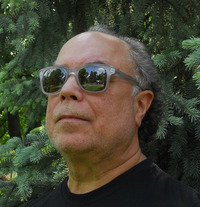
Dave Friedman has written over 30 books on automobile racing, covering a variety of classes including sports car road racing, Formula 1, Can-Am, Trans-Am, drag racing and stock cars. In recognition of his professional accomplishments, Friedman is the only still photographer elected to the Motion Picture Academy of Arts and Sciences. Friedman continued to pursue his passion for motor sports into the 1990s, when he refocused his lens on a different art form – classical ballet.
Editor-in-Chief's Note: Thank you to The Henry Ford for this summary of Dave's brilliant and influential career. -PMD
(Photo by Dave Friedman)
Dan Gurney in the factory Shelby American Cobra during the 12 Hours of Sebring, March 21, 1964.


(Images courtesy of Meguiar's)
The 1956 Chevrolet Bel Air owned by Rex Satterfield has won the Ridler Award at the 2026 Detroit Autorama. A multi-year build, Riffey’s Hot Rod took over the build after the owner of the former shop passed away. Called the "Elegant Lady," this reimagined ‘56 Chevy has had all its body panels and support structure modified and modernized. Sitting on an Art Morrison chassis, the owner opted for a Kugel Komponents independent rear suspension because he wanted inboard disc brakes. With the brake rotors out of the way, you can see expertly detailed undercarriage through the spokes of the rear wheels. The grille and side molding were all machined from billet aluminum, as were the custom wheels made by EVOD Industries. EVOD also designed a matching steering wheel and the devastatingly elegant taillights. The floor of the body was dropped over the frame, necessitating the use of a custom-made, one-piece floor pan. The firewall was also custom made with a recessed panel for the engine. Justin Spradlin of Riffey’s Hot Rods says, “Everything that can be painted, was painted, if it can't be painted, it was chromed, if it can't be chromed, it was polished stainless steel.” That sums up lengths the build team took to dress up this Chevy so that it would live up to its name.

Inside, you’ll notice the dashboard is from a ’56 Pontiac and features gauges from Classic Instruments. Steve Holcomb designed and built the sumptuous leather interior, and Jeff Wolfenbarger of Kool Kolors sprayed the custom-mixed paint that the owner calls Light Coffee. Elegant and classy, this 1956 Chevrolet stood above the rest of the Great 8 finalists in the eyes of the judging team, and we think they made a great call.

Power comes from an LS7 built by Don Hardy Engines. We all know the potential of this 7.0L package, but Don Hardy went a big step further by dropping a 4.5L Whipple supercharger on top, making this combination good for an honest 1,100 hp. Accompanying the engine, Don Hardy also built the 4L80E four-speed automatic transmission with the necessary components to handle a mountain of power coming from the engine.


 Congratulations to owners Rex and Rhonda Satterfield and the crew at Riffey’s Hot Rod for winning the Ridler Award at the 2026 Detroit Autorama.
Editor-in-Chief's Note: Our featured video this week is the "1964 Road America 500." Watch it
here. It is awesome! -PMD
The AE Song of the Week:
The sun goes down
The night rolls in
You can feel it starting all over again
The moon comes up
And the music calls
You're getting tired of staring at the same four walls
You're out of your room
And down on the street
Moving through the crowds through the midnight heat
The traffic roars
And the sirens scream
You look at the faces, it's just like a dream
Nobody knows where you're going
Nobody cares where you've been
'Cause you belong to the city
You belong to the night
Living in a river of darkness, beneath the neon light
You were born in the city
Concrete under your feet
It's in your moves, it's in your blood
You're a man of the street
When you said goodbye
You were on the run
Tryin' to get away from the things you'd done
Now you're back again
And you're feeling strange
So much has happened, but nothing has changed
You still don't know where you're going
Your still just a face in the crowd
You belong to the city
You belong to the night
Living in a river of darkness, beneath the neon light
You were born in the city
Concrete under your feet
It's in your blood, it's in your moves
You're a man of the street
You can feel it
You can taste it
You can see it
You can face it
You can hear it
You're getting near it
You want to make it
'Cause you can take it
You belong to the city
You belong to the night
You belong to the city
You belong to the night
You belong
You belong
"You Belong To The City" by Glenn Frey, from the "Miami Vice Soundtrack" (1985)*. Written by Glenn Lewis Frey and Jack Tempchin. Publisher: Wixen Music Publishing
Lyrics licensed and provided by LyricFind. Watch the Original Music Video here.
*Along with "The Heat Is On," this song was the biggest hit for Glenn Frey as a solo artist. Both songs went to #2 in America in 1985, with "The Heat Is On" held off by REO Speedwagon's "Can't Fight This Feeling" and "You Belong To The City" fended off by another "city" song: "We Built This City" by Starship. This song was used in the TV series Miami Vice in the 1985 season 2 episode "The Prodigal Son." In the first season, Frey acted in an episode that was based on his song "Smuggler's Blues." Both songs were used on the first Miami Vice soundtrack album, which sold over 4 million copies. Frey's friend Jack Tempchin wrote this song with him. Tempchin and Frey met in the late '60s when they were both starting out as singer-songwriters. After Frey formed the Eagles, he had the group record two of Tempchin's songs: "Peaceful Easy Feeling" and "Already Gone." When the group broke up in 1980, Frey made Tempchin his primary co-writer, a role previously filled by Don Henley. This partnership lasted until the Eagles reunited in 1994. (Knowledge courtesy of Songfacts.com)
Editor's Note: Click on "Next 1 Entries" at the bottom of this page to see previous issues. - WG



 Sunday, March 1, 2026 at 08:06AM
 (The Henry Ford)